
aa1 | Jueteng: An In-Depth Examination of a Persistent Philippine Phenomenon
aa1’s Explore the complexities of Jueteng, an illegal numbers game deeply rooted in Philippine society. Learn about its history, socio-economic impacts, political influence, and ongoing efforts to address its challenges.
Understanding Jueteng: A Closer Look at an Illegal Numbers Game
Within the vibrant cultural landscape of the Philippines lies a controversial and persistent anomaly: Jueteng. Despite being an illegal activity, this numbers game is deeply ingrained in Filipino society, influencing politics, economics, and social dynamics. To fully grasp the impact and persistence of this game, one must delve into its history, structure, effects, and the ongoing efforts to regulate or eradicate it.
The Origins and Mechanics of Jueteng
Jueteng, a derivative of the Spanish word "juego" meaning game, is a prominent form of illegal gambling that has stood the test of time in the Philippines. Its origins date back to the Spanish colonial era, and it has seamlessly persisted into modern times. This lottery-type game involves betting on two numbers within the range of 1 to 37 which, if correctly chosen, can yield significant payouts for participants.
The operational structure of Jueteng is akin to a grassroots movement. Central to its operations is the cobrador, responsible for collecting bets from participants. Additionally, the kubrador network ensures the smooth distribution and collection of bets and returns. The bets are then centralized and processed by an operator known as the bolador or brain of the operation, who is responsible for determining the winning numbers often believed to be drawn randomly. The hierarchical nature of Jueteng operations reflects its deep penetration into various societal levels.
The Socio-Economic Aspects of Jueteng
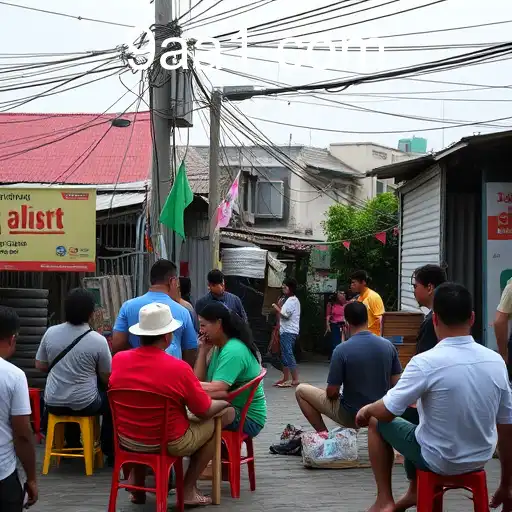
One might wonder why and how Jueteng has sustained such relevance over decades. The answer predominantly lies in the socio-economic conditions prevalent in numerous Filipino communities. For many, Jueteng represents not just a gamble for wealth but a financial lifeline. The game offers an accessible and seemingly straightforward path to potential economic emancipation, particularly for those in underprivileged areas where financial opportunities are scarce.
Moreover, Jueteng provides employment to those involved in its operations. Thousands of Filipinos may find some income and livelihood as collectors, coordinators, and organizers within this illegal lotto network, contributing to its economic footprint and making it difficult for authorities to completely dismantle the operations without addressing the larger economic conditions first.
Jueteng’s Influence on Philippine Politics
Jueteng’s existence and continuity transcend mere social and economic factors, significantly coloring the political tableau as well. The game has acted as a potent political tool, with allegations of Jueteng money being used to finance political campaigns. Politicians purportedly turn a blind eye or contribute to the proliferation of Jueteng operations in exchange for financial backing or political support, embedding the game in the political system.
Historically, Jueteng has also been at the center of controversies and corruption scandals. High-profile cases implicating government officials, and even presidents, have demonstrated how pervasive and influential the game can be in political circles. It’s argued that any comprehensive attempt to curb Jueteng must address these deep-rooted political connections to be successful.
The Legal and Enforcement Challenges
Tackling Jueteng has consistently presented substantial challenges for law enforcement and policy makers. The corruption associated with its operations complicates efforts to enforce existing anti-gambling laws. Moreover, the cultural and economic entrenchment of Jueteng means that simple legal prohibition often leads to ineffective enforcement and even public dissatisfaction.
Authorities have attempted various strategies, from crackdowns and penal statutes to moral campaigns aimed at redirecting public attitudes. However, these measures alone often fall short without sustained political will and comprehensive economic alternatives for marginalized communities.
Community Responses and Possible Solutions
Grassroots and non-governmental organizations in the Philippines play a vital role in addressing the challenges posed by Jueteng. Initiatives aimed at improving economic conditions, raising awareness of the negative impacts of gambling, and encouraging alternative forms of community entertainment have been introduced as potential remedies to Jueteng's pervasiveness.
Possible solutions to Jueteng often revolve around providing feasible economic alternatives and fostering an environment where legitimate entertainment and financial gain do not involve illegality. Addressing the systemic poverty and lack of opportunity in many areas can go a long way in reducing the dependency on illegal numbers games for income.
The Path Forward for Philippine Society
Jueteng, with its complex web woven into the economic, social, and political fabric of the Philippines, presents a difficult yet critical challenge for the nation. Finding a path forward requires addressing the root causes that allow such a game to flourish. Balancing legal reforms, economic initiatives, and political integrity while respecting cultural traditions involves a comprehensive and sustained effort across multiple sectors of society.
The ongoing debates and policy discussions surrounding Jueteng reflect broader questions of economic justice and governance in the Philippines. As the country continues to grapple with these issues, understanding the various facets of Jueteng can potentially illuminate pathways to not only eradicate illegal gambling but also foster socio-economic equity and political transparency.
